Bedding · Materials & care
Wool Bedding, Explained: Loft, Breathability, and Everyday Care
Wool can make a pillow feel springy without feeling rigid, warm without sealing in every trace of heat. Its fibers have a character of their own: resilient, air-holding, and capable of moving moisture vapor. Understanding what those qualities do—and what they do not—can help you decide whether wool belongs in your sleep routine.
Published November 23, 2026
A pillow is a modest object with an outsized job. Each night it is asked to support the head, accommodate the neck, and remain pleasant through hours of warmth and movement. It is also expected to disappear from consideration, which is perhaps the most exacting demand of all. The right pillow feels less like a purchase than like the absence of a small, persistent problem.
Wool offers one route toward that quiet. In bedding, it is valued for its springy cushioning and breathable structure. The fibers can hold pockets of air while allowing moisture vapor to move through the fill, a combination that may help a pillow feel less clammy than a material that traps warmth and dampness close to the face. Wool is not a thermostat, and it cannot promise a particular temperature or solve every sleeper’s discomfort. But its physical properties make it an intriguing option for people who want softness with some resilience, and warmth without an overly sealed-in feeling.
The practical questions are equally important. How high is the pillow? Does it keep its shape? Is the fill adjustable? What does the maker say about cleaning? Wool bedding is not a single experience: fiber preparation, fill density, casing, and construction all affect the result. A little attention to those details is more useful than assuming that a natural material will automatically suit every body or bedroom.
What wool fibers contribute
Wool fibers are naturally crimped. In a pillow, the small bends and spring of the fibers help create loft—the height and volume of the fill—and a yielding, resilient feel. Instead of collapsing into a single dense mass as soon as weight is applied, a well-made wool filling can compress and then recover to some degree. The extent of that recovery depends on how the wool has been prepared, how much fill is used, and how the pillow is assembled.
That spring is not the same thing as firm support. Loft, softness, and support are related but distinct. Loft describes the pillow’s height; softness describes how readily the surface gives way; support describes how well the pillow helps keep the head and neck in a comfortable position. A lofty pillow may be soft and still offer too much height for one sleeper. A lower pillow may feel stable but leave another person wanting more cushioning. The same fill can therefore feel very different depending on the construction and the way it is used.
Wool’s structure also leaves room for air between fibers. Airflow and moisture movement are often part of the appeal of breathable bedding: heat and water vapor have paths through the material rather than meeting an uninterrupted barrier. This can contribute to a drier, more comfortable sensation for some people, though room temperature, humidity, sleepwear, covers, and individual physiology matter too. No filling can guarantee that a person will sleep cool, and “breathable” is a description of material behavior, not a universal promise of comfort.
The feel tends to be less slick and buoyant than some foams, and less granular than a pillow filled with buckwheat hulls. Compared with a tightly packed, uniform fill, wool can feel softer and more yielding. Those are broad comparisons, not rules: the casing and construction can alter the experience substantially. If you are choosing between materials, think in terms of the sensation you want—moldable, springy, firm, or plush—rather than treating one fiber as an all-purpose winner.
Loft, alignment, and the way you sleep
Pillow loft is easiest to judge in use. A pillow that looks generously full on a bed may compress considerably under the head; another that appears modest may maintain more height than expected. The pillow should help your head rest in a comfortable, neutral position rather than tipping it sharply upward or allowing it to fall too far toward the mattress. Body shape, mattress firmness, and sleeping position all influence what that means in practice.
Side sleepers often need enough height to fill the space between shoulder and head, though the amount varies with shoulder width and how much the mattress lets the shoulder sink. Back sleepers may prefer a lower or more moderate loft that supports the natural curve of the neck without pushing the chin toward the chest. Stomach sleepers commonly find that a very lofty pillow can create an uncomfortable angle; some prefer little height, or none. These are starting points for observation, not medical instructions. Persistent pain or numbness deserves professional advice rather than a bedding experiment alone.
The filling’s resilience matters here. If a pillow compresses quickly and stays compressed, its original loft may not tell you much about the support you will feel at night. Wool’s springiness can help it retain a cushioned shape, but the word “wool” by itself does not specify density or performance. Product details that describe the fill, construction, dimensions, and whether the loft can be adjusted are more informative than a broad material label.
Some wool pillows are made from loose clusters or carefully carded batting; others may have a more structured construction. The Wooly Bolas Pillow, for example, uses fluffy clusters formed from Eco-Wool batting. Its six-step carding process is described as creating consistent batting and loft, and the pillow is made in the United States from wool sourced from domestic flocks. Those details offer a useful picture of how a wool pillow can be built: the fiber is prepared to create a soft, adaptable fill rather than simply packed in as an indistinguishable mass. They do not, on their own, establish a specific sleeping position or ideal loft for every user.
Wool pillows and the rest of the bed
A pillow does not operate in isolation. It sits beneath a pillowcase, on top of a mattress, and within a room whose temperature changes with the season and the weather. A breathable wool fill may be paired with a cotton casing and a washable pillow protector, for instance. Each layer has its own role: the fill supplies cushioning; the cover affects the surface feel and helps protect the interior; the mattress and bedding influence the larger sleep environment.
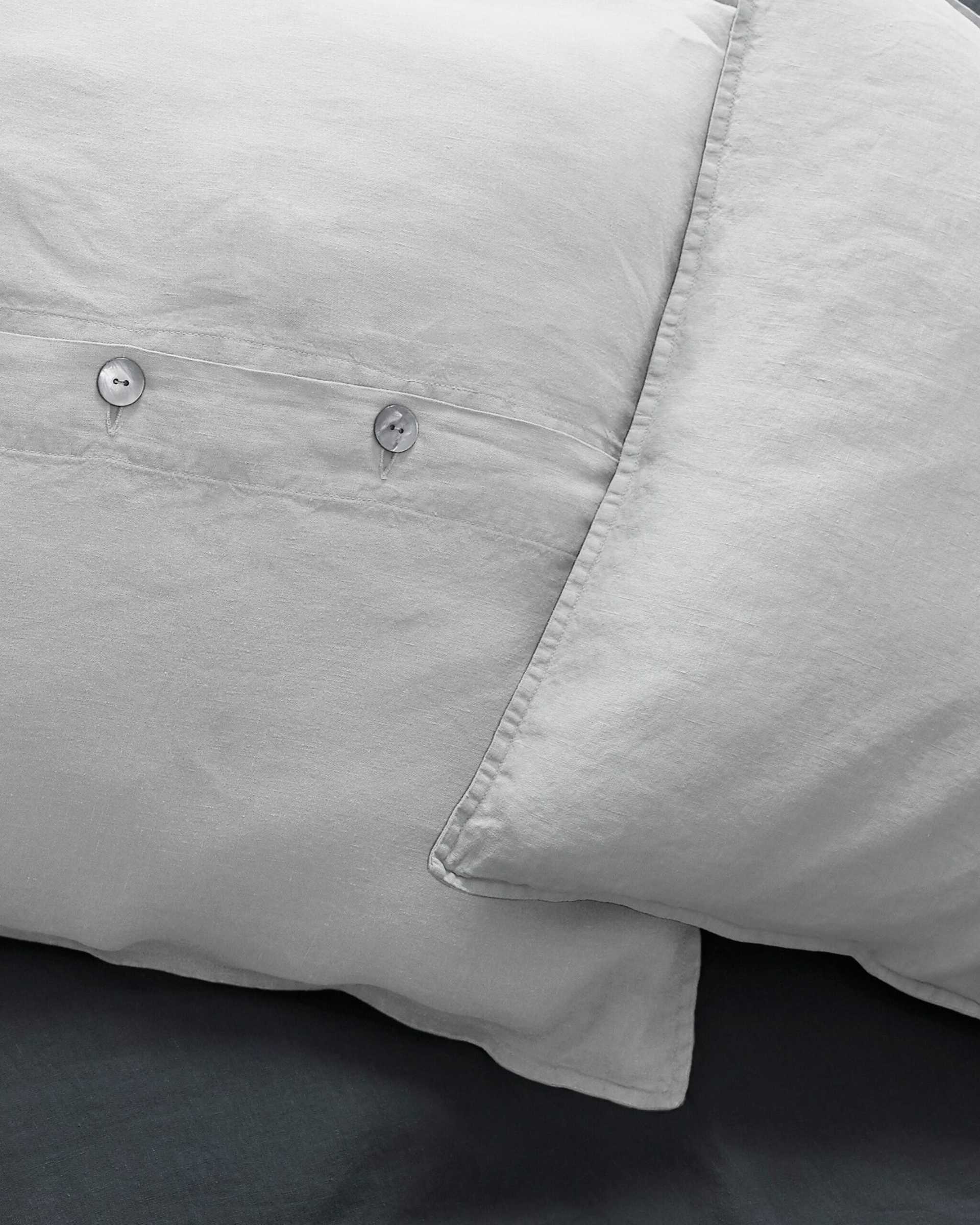
It is helpful, too, to distinguish a wool pillow from other wool bedding. Wool in a pillow is a filling designed to cushion the head. A wool mattress layer serves a different purpose across a broader surface, while a wool-blend decorative cover is primarily a textile finish. The Shetland Pillow Cover, made from linen and wool with a washed finish and wool trim, illustrates that last category. It is a cover, not a wool-filled sleep pillow, and its stated purpose should not be confused with the support provided by a pillow’s interior.
This distinction becomes especially useful when shopping by material name. A listing that says “wool” may refer to the fill, the outer fabric, a trim, or a blend. Look for a clear materials description and check whether the item includes an insert. If the information is incomplete—particularly about care, fill, or dimensions—it is reasonable to ask the retailer or maker for clarification before deciding.
Everyday care: gentle habits, useful boundaries
Wool pillow care begins with the care instructions for that particular construction. Wool is a natural fiber, but that does not mean every wool pillow can be washed in the same way. Some pillows may have a removable cover that can be cleaned separately; others may require spot care or professional attention. Washing the entire pillow without checking can cause problems for the fill or the shape. When a maker has not supplied care directions, do not assume that a machine-washable pillowcase means the pillow itself is washable.
Keeping the fill dry is a sound everyday principle. Use a pillowcase, and consider a washable protector if it suits the pillow’s construction and your preferences. Air the pillow periodically in a dry, well-ventilated space, away from prolonged moisture. If the pillow becomes damp, allow it to dry thoroughly before covering it again. A clean, dry environment helps reduce stale odors and protects the materials from unnecessary wear.
Regularly fluffing or gently reshaping the pillow can help redistribute loose filling and restore its outline. The aim is not to beat it into submission. A light shake, a few careful squeezes, and a turn from one side to the other are generally more sensible than vigorous pounding, which may strain seams or cause fill to shift unevenly. If the pillow has a zipper intended for adjustment, follow the maker’s directions before opening it, and avoid removing more fill than you can comfortably store or return.
Spot-cleaning should also be restrained. Blot a small spill rather than rubbing it into the fabric, and use only a method compatible with the cover and filling. Strong fragrance products or harsh cleaners can leave residues and odors; the safest choice is to follow the manufacturer’s specific guidance. If a pillow develops a persistent smell, visible staining, or a change in texture, check the care instructions or seek advice rather than improvising with heat, soaking, or aggressive detergents.
A protective cover is not a substitute for cleaning instructions, but it can limit the ordinary accumulation of skin oils, dust, and perspiration on the pillow itself. Wash the pillowcase and protector according to their labels, and make sure both are completely dry before putting them back on. The small ritual of changing bedding is less dramatic than buying new bedding, and usually more useful.
How to assess a wool pillow before choosing
A short checklist can make a crowded product page easier to read. Start with the material: is wool the filling, the casing, or only part of a blend? Then look for construction details. Is the fill loose, layered, or clustered? Does the pillow have an adjustable closure? Are dimensions given? These answers help translate the appealing generalities—soft, resilient, natural—into a more concrete expectation.
- Consider your preferred loft. Think about the pillow height that has felt comfortable in the past, and remember that the filled pillow may compress when you lie on it.
- Match the support to your position. Side, back, and stomach sleeping can call for different heights, but mattress feel and personal anatomy also matter.
- Check the full materials list. Confirm what the fill and cover are made from rather than relying on a product title alone.
- Read the care directions. Find out whether the cover is removable, whether the pillow can be washed, and how the maker recommends refreshing it.
- Look for adjustability and dimensions. These details can help you judge whether the pillow can be tailored to your comfort and whether it will fit your pillowcase.
- Keep expectations individual. Natural fibers have useful properties, but comfort depends on the sleeper, the room, and the whole bedding setup.
A material with limits—and possibilities
Wool’s appeal is not mysterious. Its fibers can create a cushioned, springy fill; their structure allows air to occupy the spaces among them; and their handling of moisture vapor may contribute to a less stuffy sensation for some sleepers. These qualities can make wool an appealing alternative to fills that feel either too flat or too uniform. They also explain why wool appears across more than one kind of bedding, from pillows to mattress layers.
But material descriptions should not be mistaken for verdicts. Wool is not automatically cooler than every other fill, nor does natural origin guarantee that a product will suit a particular sleeper. A pillow may feel too lofty, too soft, or too unfamiliar. Someone seeking pronounced contouring may prefer another construction; someone wanting a very firm, adjustable fill may need to compare wool with other options. The honest question is not whether wool is best, but whether this wool pillow, with this construction and this care routine, answers a real need.
That is the practical pleasure of paying attention to materials: not the fantasy of a perfect bed, but the chance to make a better-informed choice. Consider the loft you need, notice how the pillow responds under your head, and protect it from avoidable moisture. Follow the maker’s care guidance rather than the optimistic instructions one might wish were true. If the combination works, wool can become an unobtrusive part of the night—softly present, quietly resilient, and no longer something you have to think about.